
Our story
How a month in a Peruvian prison became 18 years of work in the Andes
How it started
In 2008, Martha Dudenhoeffer traveled to Ayacucho, Peru, and spent a month volunteering inside a women's prison. She went in nervous. She came out changed.
She expected to find criminals. What she found were normal women, mostly mothers, who had made a bad decision for the right reasons, or in some cases no decision at all. The cartels operating in the region know exactly who is vulnerable. They recruit desperate women to carry drugs, and when those women are caught, they bear the full weight of the law. A first offense can mean 12 years. The cartels move on.
Some of the women had their babies with them. Infants live inside Peruvian prisons with their mothers until the age of three, then are separated. Martha watched women caring for toddlers in a prison yard, earning almost nothing, buying their own soap and sanitary products with money they did not have.
She went home. She kept thinking about them. She came back. And in 2008, Maki International was born.
"Maki means hands in Quechua. It was the right word. These women work with their hands. We work alongside them. Hands linked to hands."
Martha Dudenhoeffer, FounderWhy Ayacucho
To understand Maki, you have to understand Ayacucho.
In the 1980s and 1990s, a Marxist guerrilla movement called the Shining Path took root here. What followed was a decade of terror. More than 70,000 civilians were killed, many of them in small rural communities where both the guerrillas and the military treated ordinary families as targets. Schools closed. Government services collapsed. Those with means fled to Lima. Those without means stayed, and did what they could.
The women Maki works with are the direct inheritors of that history. Most grew up in the countryside, in communities where subsistence farming was not a last resort but the only option. They received little formal education. They had almost no access to economic opportunity. And when drug cartels moved through offering quick money to women who could not feed their children, the consequences were devastating and entirely predictable.
Who we serve
Maki works with women across six communities in the Ayacucho region, each facing a distinct set of circumstances but united by a common thread: limited access to economic opportunity, education, and the kind of institutional support most people take for granted.
Inside Huanta Women's Prison, hundreds of women are impacted by Maki each year through a daily artisan workshop, psychological support programs, self-esteem and leadership training, and community events for the full prison population. The workshop is not just a source of income for the women who come through it. It is structure, community, and proof that they are capable of something. And through Libre Soy, formerly incarcerated women across Peru gather monthly to support one another through the challenges of reentry.
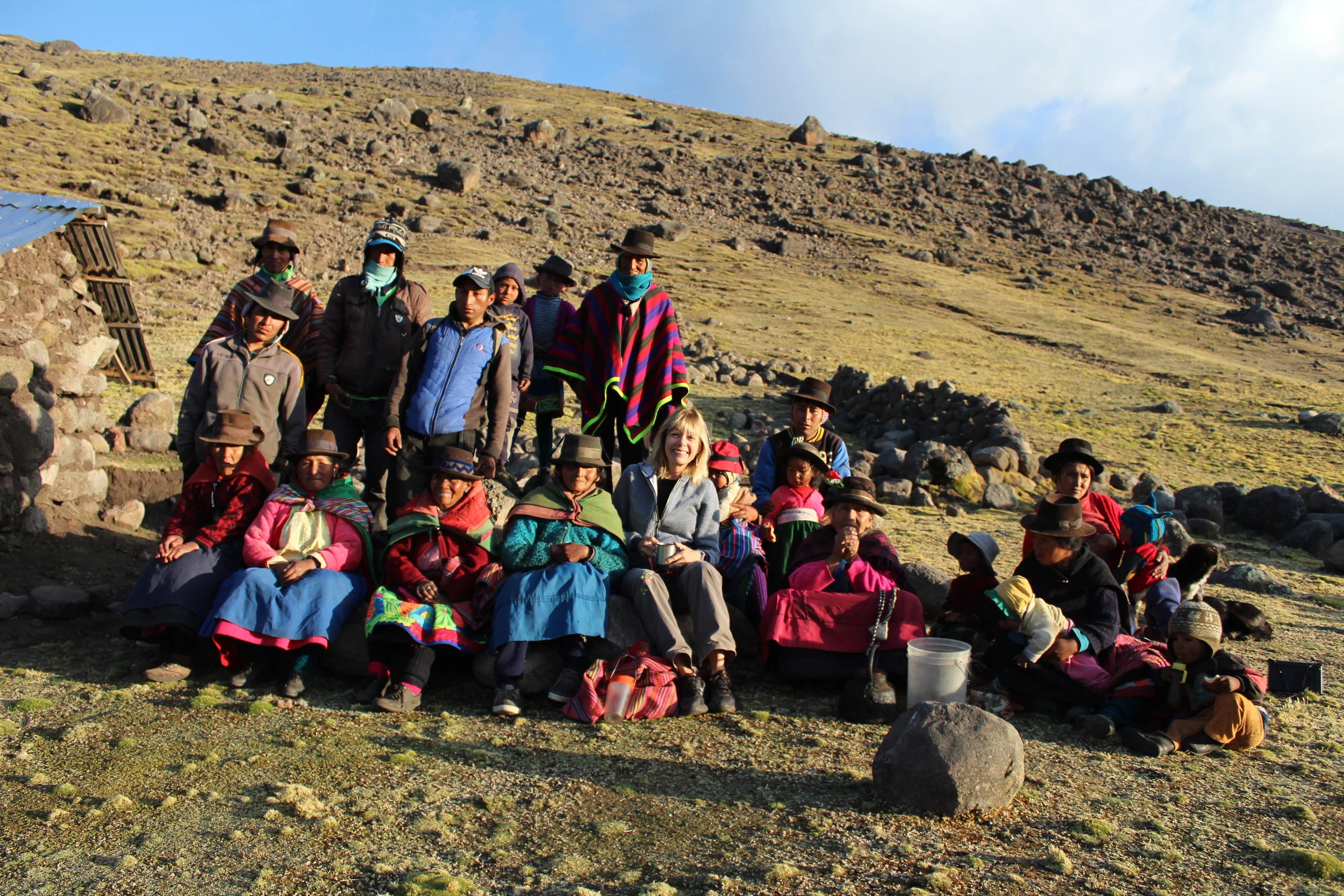
In the mountain communities above Ayacucho, 900 women earn income embroidering belts, purses, and textiles sold internationally through Hilos y Colores. They do this work at home, alongside tending animals and caring for children. In a traditionally patriarchal society, an independent income changes the balance of a household.
At the primary school in Occollo, nearly 100 children now receive breakfast and lunch every school day. Three years ago many were clinically anemic, too hungry to concentrate, too depleted to learn. In the most recent round of blood tests, not a single child was anemic.
In Vinchos, a growing cooperative of guinea pig farms now generates sustainable income for families who had few economic alternatives before. In Wiriccllea, at 15,000 feet, a decade of patient presence has created the conditions for women to begin producing embroidered goods for the first time.
Sustaining meaningful impact
From the beginning, Martha built Maki around a philosophy that runs counter to how many nonprofits operate. Maki does not chase scale. It does not measure success by the size of its reach. It measures success by the depth of change in the communities it serves.
That means showing up in a small number of communities and staying for years. It means earning trust slowly and designing programs alongside local partners who understand the culture, the geography, and the people far better than any outsider could. It means treating every woman as a potential entrepreneur, not a passive recipient of aid. And it means never starting a program that cannot be sustained.
Martha learned this the hard way early on. In one of her first years at the prison, she arranged for two flushing toilets to be installed for the women, who had been using holes in the ground. Six months later, she came back to find the toilets being used as a broom closet. The women had been encouraging her out of politeness, not need. It was a turning point. From that moment, Martha became a more careful listener, leaning far more heavily on local partners who understood the communities from the inside. That shift in approach has shaped everything Maki has done since.
Maki has never been about dramatic interventions or sweeping fixes. What has sustained this work is people showing up and doing what they can, consistently, over time. Parents who trust us. Families who commit to new livelihoods. Women inside the prison who support one another. Partners who listen. And donors who quietly make the work possible year after year.
To support Maki's work, visit our donation page or mail a check to Maki International, P.O. Box 2301, Del Mar, CA 92014.
Maki International is a 501(c)(3) nonprofit organization.